

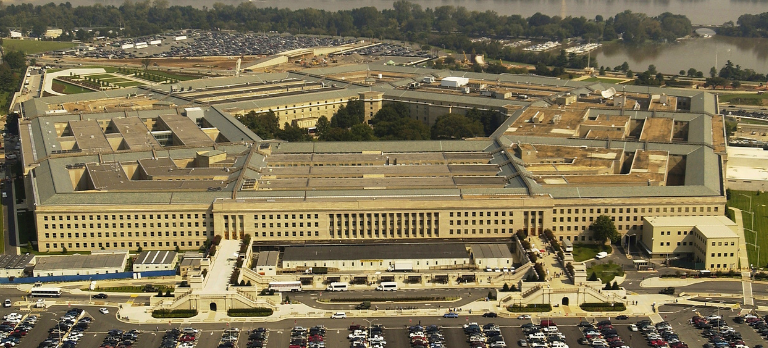


The 2026 National Defense Strategy (NDS) outlines a decisive shift in U.S. defense priorities, centered on homeland security, strategic deterrence, allied burden-sharing, and revitalizing the defense industrial base. Framed around an “America First” approach and the principle of restoring peace through strength, the Strategy presents a focused and pragmatic roadmap for addressing today’s most consequential security threats.
For defense leaders, policymakers, and industry stakeholders, the 2026 NDS provides a clear articulation of how the United States intends to prioritize resources, posture forces, and shape global security conditions in the years ahead.
Defending the U.S. Homeland as the Top Priority
At its core, the 2026 National Defense Strategy prioritizes defending the U.S. Homeland as the Department of War’s foremost responsibility. Homeland defense is positioned not as one mission among many, but as the foundation upon which all other strategic objectives rest.
The Strategy emphasizes securing borders, countering narco-terrorists in the Western Hemisphere, modernizing nuclear forces, strengthening cyber defenses, and developing advanced missile defense capabilities such as the “Golden Dome for America.” It also reinforces the importance of defending key terrain in the Western Hemisphere and maintaining credible deterrence against both conventional and unconventional threats.
By clearly elevating homeland defense, the NDS signals a shift toward prioritizing direct and immediate threats to American security.
Deterring China in the Indo-Pacific Through Strength
A central pillar of the 2026 NDS is deterring China in the Indo-Pacific through strength, not confrontation. The Strategy recognizes the Indo-Pacific as the world’s most dynamic economic region and underscores its importance to U.S. prosperity and long-term security.
Rather than seeking escalation, the Strategy outlines a posture built on deterrence by denial. This includes building and sustaining a strong defensive architecture along the First Island Chain while maintaining open channels of military communication to reduce miscalculation. The objective is to prevent domination by any adversary and maintain a favorable balance of power that enables peace and stability.
For defense planners and industry leaders, this focus carries significant implications for force posture, maritime capabilities, logistics, and advanced technologies in the Indo-Pacific theater.
Addressing Persistent Threats: Russia, Iran, and North Korea
Beyond China, the Strategy details the evolving threat landscape posed by Russia, Iran, and North Korea.
Russia is characterized as a persistent but manageable threat, particularly in Eastern Europe, while still maintaining significant nuclear and cyber capabilities. Iran is addressed in the context of regional destabilization and nuclear ambitions, alongside efforts to counter its proxy networks. North Korea remains a direct threat to U.S. allies in the region and an increasingly credible nuclear risk to the U.S. Homeland.
The document also introduces the concept of the “simultaneity problem”—the need to prepare for coordinated or overlapping crises across multiple regions. This assessment shapes both force structure decisions and alliance expectations moving forward.
Increasing Allied Burden-Sharing and Accountability
One of the most significant strategic shifts in the 2026 NDS is its emphasis on increased burden-sharing among U.S. allies and partners.
The Strategy calls for NATO and other allies to assume primary responsibility for regional conventional defense, supported by updated defense spending commitments and clearer accountability measures. This approach is designed to strengthen collective deterrence while enabling U.S. forces to prioritize the most direct and consequential threats.
By recalibrating alliance responsibilities, the NDS seeks to maintain global stability without overextending U.S. military resources. For defense contractors and allied nations, this shift may influence procurement priorities, joint development efforts, and industrial collaboration.
Revitalizing and Supercharging the Defense Industrial Base
The 2026 National Defense Strategy makes clear that military strength depends on industrial capacity. The U.S. Defense Industrial Base (DIB) is described as the foundation of long-term deterrence and operational readiness.
The Strategy calls for expanded production capacity, revitalized domestic manufacturing, integration of emerging technologies such as artificial intelligence, and closer collaboration with both traditional and nontraditional vendors. It also emphasizes leveraging allied industrial capabilities to support shared defense objectives.
This focus reflects a recognition that sustained military advantage requires not only advanced platforms and systems, but also resilient supply chains, innovation ecosystems, and scalable production capacity.
A Focused Framework for Long-Term Strategic Stability
Taken together, the 2026 National Defense Strategy outlines a resource-conscious and strategically prioritized framework aimed at sustaining military superiority while reducing the risk of major conflict.
By concentrating on homeland defense, deterring China, recalibrating alliances, and strengthening industrial capacity, the Strategy seeks to align ends, ways, and means in a manner designed to preserve peace through strength.
For defense professionals, policymakers, and industry leaders, the full report provides deeper insight into force posture adjustments, modernization priorities, alliance dynamics, and long-term investment implications.
Access the full 2026 National Defense Strategy on GovWhitePapers to explore the complete framework and understand how it will shape U.S. defense policy and industrial priorities in the years ahead.